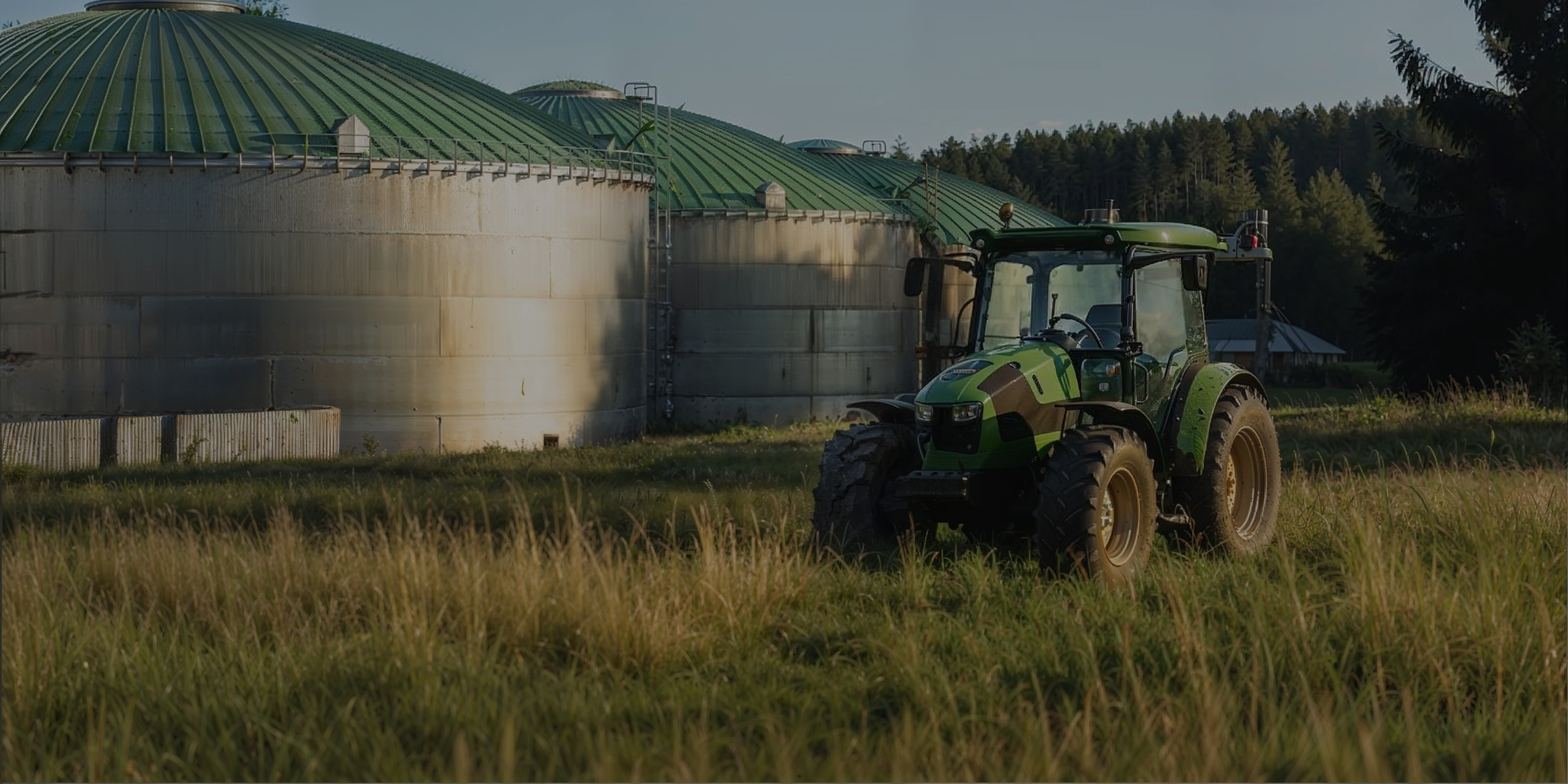
Energy recovery after the war: the role of biogas plants

Malvina Schynkarchuk — 17.11.2025


Malvina Schynkarchuk — 17.11.2025
The full-scale war not only destroyed Ukraine’s energy system but also became a catalyst for its transformation. According to the Ministry of Energy, more than 75% of renewable energy facilities were damaged or destroyed as a result of the war. And the massive blackouts of 2022–2023 and 2025 revealed the systemic vulnerability of centralised energy systems. For the first time in decades, Ukrainian businesses and communities realised that the reliability of energy supply cannot depend solely on a single network or a few large generators.
The government, energy companies and local authorities have been forced to rethink the very model of energy supply and focus on decentralised generation, flexible power sources and local renewable resources. An important element of this recovery is biogas plants.
Unlike solar or wind power stations, biogas complexes provide uninterrupted energy generation 24/7. That is why, due to frequent blackouts, biogas stations have become one of the most stable sources of energy in Ukraine. What is unique about the production of biogas from waste is that biogas plants do not run on local energy resources in Ukraine, but on local renewable raw materials.
During the mass blackouts of 2022, it was Ukraine’s biogas plants that continued to provide local communities with light and heat. Their experience has proven that decentralised generation is one of the most reliable solutions for local sustainability.

Calypso Biogas (3.12 MW) is a modern biogas plant built during martial law that processes over 57,000 tonnes of corn silage per year. It ensures the production of biogas and a stable supply of “green“ electricity for agricultural enterprises, setting an example of sustainable generation even in wartime.
The Teofipol BGS (15 MW) — one of the largest in Ukraine — supplied electricity to the sugar factory and the community even during the blackouts of 2022–2023, becoming an example of energy independence for the community.
MHP (Oril — 5.5 MW, Ladyzhyn — 12 MW) — the company’s biogas complexes continued stable generation during energy crises, and in 2023, MHP began the transition to the production of biomethane and bio-LNG.
Ukrainian Dairy Company — the farm is completely self-sufficient in energy from livestock waste, demonstrating a practical model of energy self-sufficiency for businesses.
BGS at landfills (Kyiv, Rivne, Lviv) — biogas collection facilities operated non-stop, generating electricity for municipal facilities and reducing methane emissions.
Before the full-scale invasion, new projects were considered only for electricity or biomethane, but today new concepts for biogas and biomethane plants must include biogas cogeneration to provide the BGZ with electricity and heat, which solves the issue of plant shutdowns during blackouts.
Ukraine has included the development of bioenergy in its National Energy Strategy until 2032, which envisions the gradual replacement of imported gas with domestically produced biomethane and biogas.
One of the key mechanisms of international support is the Ukraine Energy Support Fund, created within the Energy Community program with the support of the EU and partner governments. The Energy Recovery Fund finances the reconstruction and modernisation of Ukraine’s energy infrastructure.
Priority is given to decentralization and diversification of energy sources, as well as cogeneration for enterprises, which makes bioenergy a strategic direction for post-war recovery.
Thanks to successful bioenergy projects, Ukraine already has practical experience in this field. More than 80 biogas facilities operate across the country, supplying local communities with electricity.
The European Investment Bank (EIB) and KfW (German state development bank) are actively supporting the restoration of Ukraine’s energy sector by financing projects for the development of biomethane, biogas and energy efficiency.
Through the FELICITY II programme, the German agency GIZ is helping Ukrainian cities to implement sustainable energy infrastructure.
In 2024, the German government allocated €130 million to the Ukraine Energy Support Fund. These funds are earmarked for the purchase of equipment, repair and modernisation of energy infrastructure, including renewable projects, particularly in the field of bioenergy.
For local communities, a biogas plant is an opportunity to reduce heating costs by 30–60% compared to gas, create new jobs, solve the problem of waste processing, and most importantly, ensure the energy independence of communities even during wartime.
Biogas technologies also stimulate the development of agricultural enterprises and contribute to soil restoration through the use of organic fertilisers (digestate).

The restoration of the energy sector after the war is impossible without resolving systemic problems in the industry. The main barriers to the development of bioenergy are financial and organisational:
1. Lack of funding and high insurance risks. Due to war risks, international banks and private investors are cautious about new projects.
Solution: expansion of EU grant programmes, as well as raising funds through the Ukraine Energy Support Fund and EIB and KfW programmes.
2. Insufficient state support for projects at the local level.
Solution: creation of a Decarbonisation and Energy Efficiency Fund, whose resources would be directed towards modernising heating systems, implementing cogeneration solutions and launching municipal biogas initiatives.
3. Shortage of qualified personnel.
Solution: development of educational programmes in energy management, agrobiological engineering and automation in partnership with European universities and relevant associations.
After the war ends, Ukraine will move from planning to the practical implementation of investments in renewable energy. Bioenergy will become one of the key areas of economic growth and energy security for the country.
According to estimates by the Bioenergy Association of Ukraine, biogas technologies can replace up to 20% of natural gas consumption in the country, and biomethane can become an export resource to the EU thanks to integration into the REPowerEU system.
Biogas plants are one of the strategic foundations of a sustainable energy system for the future. Ukraine has all the prerequisites to make biogas production from waste part of its national energy policy. And effective preparation of raw materials and support for innovative companies will ensure the success of this transformation.
Do you want to make your enterprise or community energy-independent? Contact Pro-Energy to assess the potential of your biogas project.
Also, read detailed answers to frequently asked questions about biogas plants to better understand the economic and technical advantages of these technologies.
Send us a request, and we’ll personally provide the answers during a consultation.
Thank you for your request! The manager will contact you shortly to answer all your questions.
In the meantime, check out our implemented projects.
Periodically, you will receive letters from us with all the latest news from the field of bioenergy.
So that the letters do not end up in spam, please add info@pro-energy.com.ua to the list of contacts in the mail.
We will be in touch!