What is cogeneration, and how does it work?

Volodymyr Kononchuk — 26.02.2026


Volodymyr Kononchuk — 26.02.2026
Today, Ukrainian enterprises face numerous problems every day due to blackouts and power restrictions from the OSR. Production loses batches of products. Ventilation in poultry houses stops, killing birds. Refrigeration equipment in shopping centres does not work, resulting in losses, product returns, and reputational risks.
That is why more and more entrepreneurs, farmers, and community leaders are looking for autonomous energy sources. In this article, the Pro Energy team explains:
Cogeneration is the simultaneous production of electricity and heat within a single piece of equipment. Two forms of energy from one type of fuel.
A cogeneration plant generates heat for business purposes: for space heating, water heating, and technological processes. Thanks to this, the efficiency of such systems reaches 85–93%, while a conventional power plant only achieves 38–40%.
This fundamentally changes the logic of energy consumption: you don’t just buy energy — you control its production, cost, and stability.
The heart of any cogeneration plant is an engine or turbine that produces mechanical energy. This energy is converted into electricity by a generator, and the heat generated in the process (from the engine and flue gases) is not lost but recovered and returned to the production cycle.
The system works more efficiently than a separate boiler and generator, because fuel costs are the same, but the output is twice as high.
Depending on the tasks, choose:
The plant can run on natural gas, biogas, LPG, and, in the future, hydrogen. Information on how to prepare raw materials for biogas is available here.
First and foremost — lower energy costs. Businesses that have installed cogeneration systems save up to 50% on energy costs, as electricity and heat are generated simultaneously and on site. No losses in the networks.
The second is energy independence. During blackouts, cogeneration facilities continue to operate. They are not subject to dispatcher restrictions or stabilisation shutdowns. This solution does not take production out of the game.
Third — environmental friendliness. Especially when it comes to cogeneration with biogas. In this case, the plant not only generates energy, but also helps to process waste — silage, manure, and organic residues. Learn more about the advantages of cogeneration in wartime.
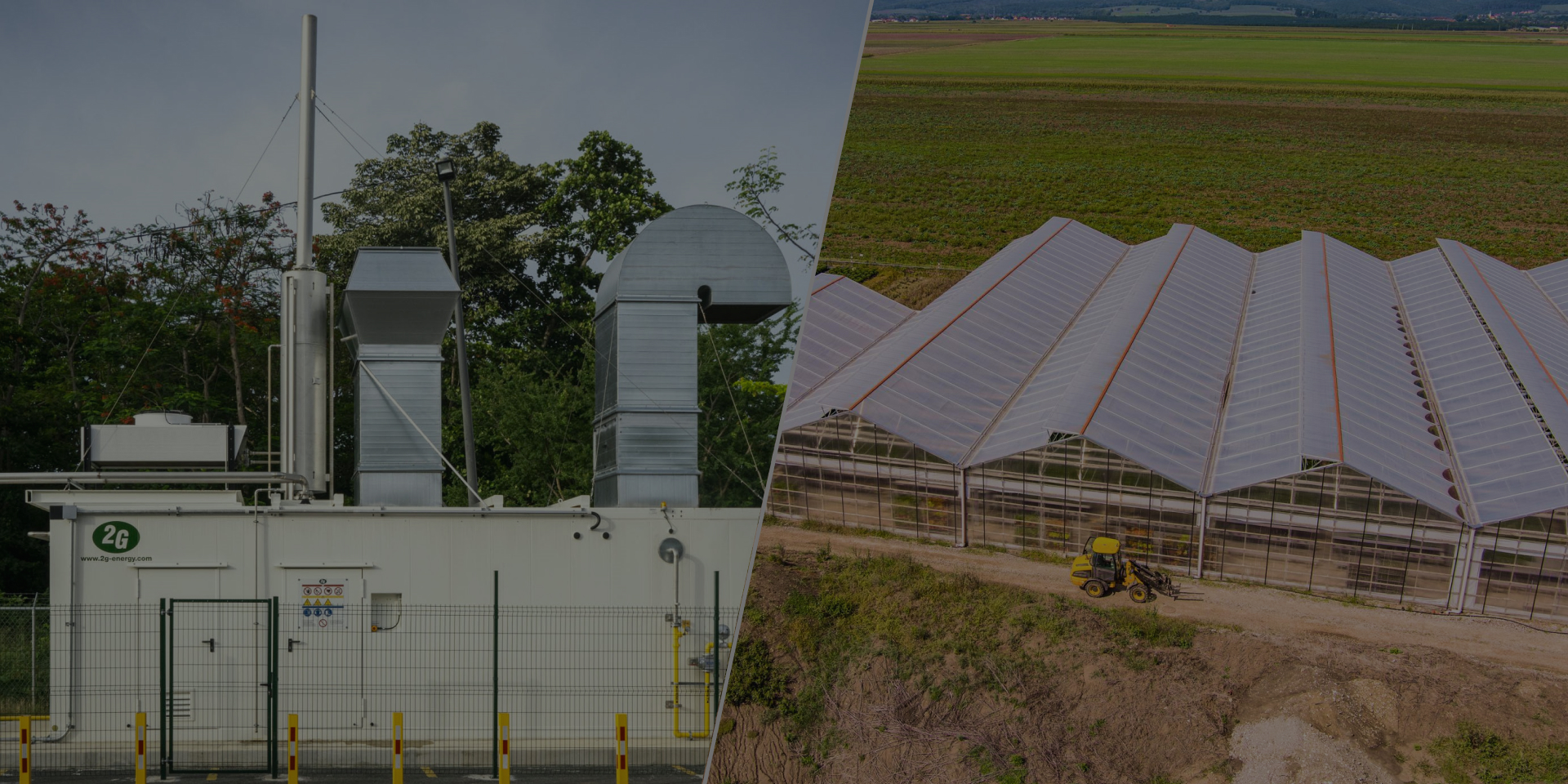
From the outside, a cogeneration plant is a metal container with a pipe. But inside, it is a complex system with an internal combustion engine, a generator, heat exchangers, and a control and protection panel. Operation begins with the supply of fuel — natural gas, biogas, or a propane-butane mixture.
Fuel burns in the engine, the shaft rotates, and mechanical energy is transferred to the generator, where it is converted into electrical energy. Instead of releasing waste heat energy into the environment, a cogeneration plant captures and utilises it through a heat recovery system, which then transfers it to heating circuits, technological needs, or a hot water supply.
Heat is removed from the exhaust gases, cooling jacket, and lubricant, passes through plate or tube heat exchangers and is fed further through a buffer tank or directly. The control system regulates the load, balances generation, displays parameters on the screen, and signals deviations or the need for service intervention.

Starting in 2022, energy generation in Ukraine has become not just a trend but a strategic necessity. Businesses are increasingly looking for autonomous energy supply options, and government policy supports this.
At the same time, there is growing interest in renewable energy, particularly biogas solutions, which have the potential to export biomethane to the EU. Additional factors driving growth in demand for autonomous energy sources include rising electricity prices and the need to bring generation solutions into line with the European Union’s climate and regulatory requirements.
Against the backdrop of these changes, cogeneration plants are becoming part of the new infrastructure in enterprises, communities and the public sector.
Pro-Energy has implemented a number of projects that demonstrate how cogeneration for business works in reality, not just on paper. These facilities continue to operate steadily today, even amid threats to the energy system.
The company has installed two cogeneration modules, each with a capacity of 1560 kW. The plant runs on its own biogas, which is produced from silage, pomace, and cattle manure.
What the client received:
The implementation of this solution was made possible by a closed technological cycle, which includes raw material preparation, anaerobic fermentation, biogas purification, and its delivery to cogeneration modules.
For more details on the technology of producing biogas from agricultural raw materials for cogeneration needs, see the relevant thematic article.
It is important to integrate the human factor into this example: each project is not a template solution, but the result of auditing, design, and optimisation. And this is the key difference in the Pro-Energy approach: we do not just supply equipment, we implement a system that works.
Cogeneration in municipal heat supply is an opportunity to transition from outdated boiler rooms to modern, highly efficient solutions. Municipalities can not only reduce heat loss, but also earn money by supplying electricity to the grid.
Cogeneration is a solution for those who want to be partially or completely energy independent. It ensures an uninterrupted power supply and compliance with energy efficiency requirements. It is not just a technology, but an engineering solution for businesses with a long-term planning horizon.
Send us a request, and we’ll personally provide the answers during a consultation.
Thank you for your request! The manager will contact you shortly to answer all your questions.
In the meantime, check out our implemented projects.
Periodically, you will receive letters from us with all the latest news from the field of bioenergy.
So that the letters do not end up in spam, please add info@pro-energy.com.ua to the list of contacts in the mail.
We will be in touch!