Cogeneration for hotels and shopping centres: case studies and calculations

Oleh Yovzhenko — 08.07.2026

Oleh Yovzhenko — 08.07.2026
Hotels and shopping centres are facilities with consistently high energy consumption, where electricity, heating and cooling are required every day without interruption. In such conditions, cogeneration becomes the standard model for energy supply.
The power cuts of 2022–2025 showed that even a few hours without electricity can result in the loss of tenants, spoilage of goods and reputational risks.
This article features real-life case studies from Pro-Energy, the potential of cogeneration for small and medium-sized businesses, cost-benefit analyses and typical configurations for hotels and shopping centres, which demonstrate the practical effectiveness of cogeneration solutions.
The hotel is open 24/7 and enjoys a steady flow of guests with no seasonal lulls:
Shopping centres have a different structure, but one that is no less favourable for cogeneration:
Operating hours — 10–14 hours a day, with peak loads at weekends. This creates ideal conditions for the CHP plant to operate at high efficiency and enables it to effectively take account of current trends in the development of cogeneration in Ukraine in 2026.
That is precisely why cogeneration for shopping centres and hotels offers the quickest payback period among commercial properties.
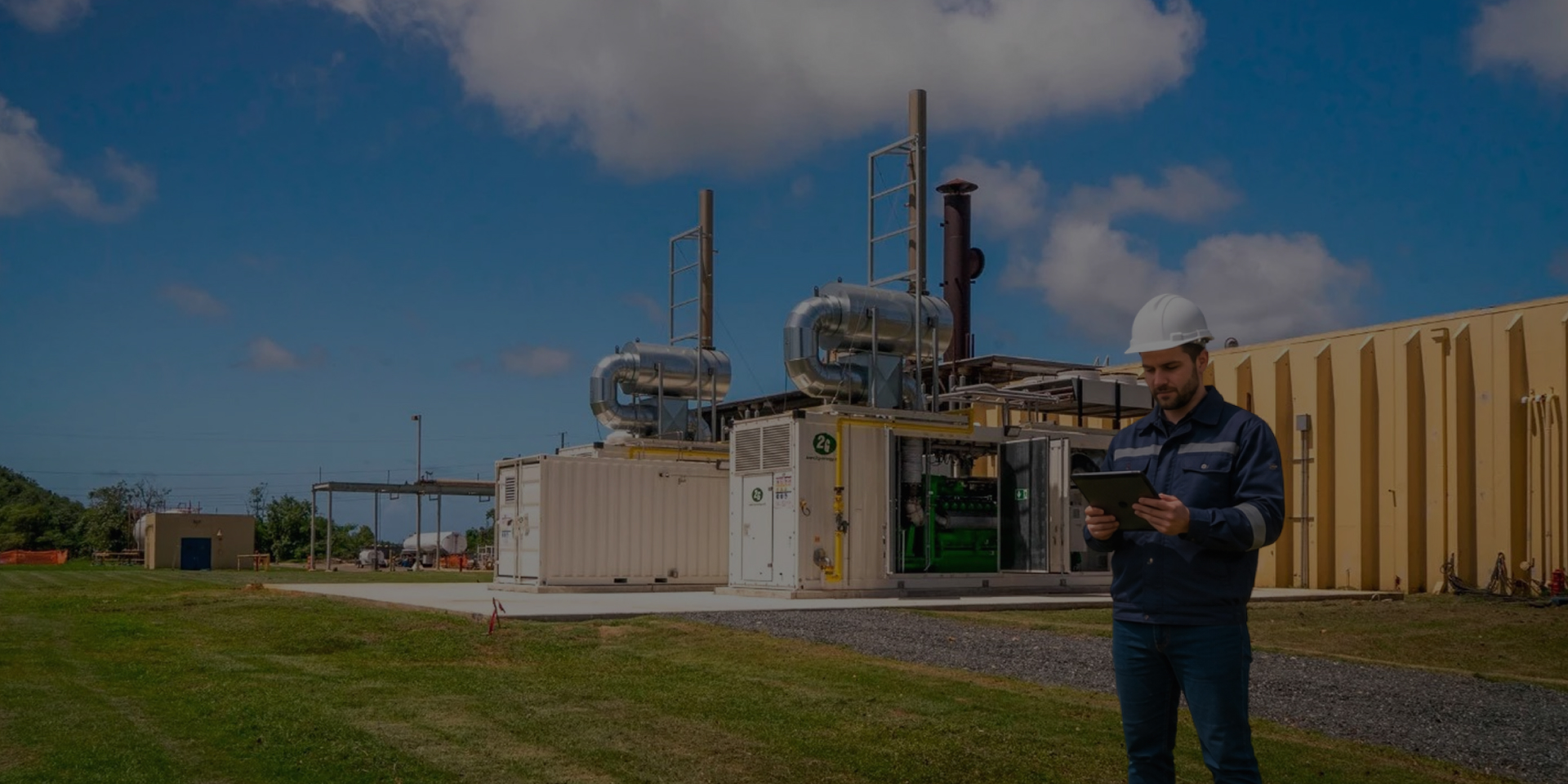
A shopping centre in the Ivano-Frankivsk region faced a problem typical of large-scale facilities: high electricity costs and complete dependence on the grid during power cuts. In addition, there was a need to integrate with an existing solar power plant.
Object parameters:
Pro-Energy has implemented a system based on the AVUS 1000 Plus (1 MW):
The shopping centre is now able to remain open even during power cuts without its tenants having to suspend their operations.
The facility already had a 2G cogeneration unit in place, but required:
The key requirement is to ensure that tenants do not experience any downtime.
Pro-Energy has successfully commissioned the AVUS 1000 Plus (1 MW) unit:
This case study demonstrates that even off-the-shelf equipment requires proper integration, which is particularly critical in challenging market conditions and when addressing the challenges of cogeneration in Ukraine.
Typical configurations for combined heat and power (CHP) plants depend directly on the scale of the facility, its energy consumption profile and the presence of heating and cooling loads. Below are some practical solutions most commonly used for hotels, shopping and leisure centres. Provided there is a stable load, full heat recovery and the correct capacity selection, such projects enable a payback period of 3–5 years, making cogeneration one of the most efficient solutions for commercial property.
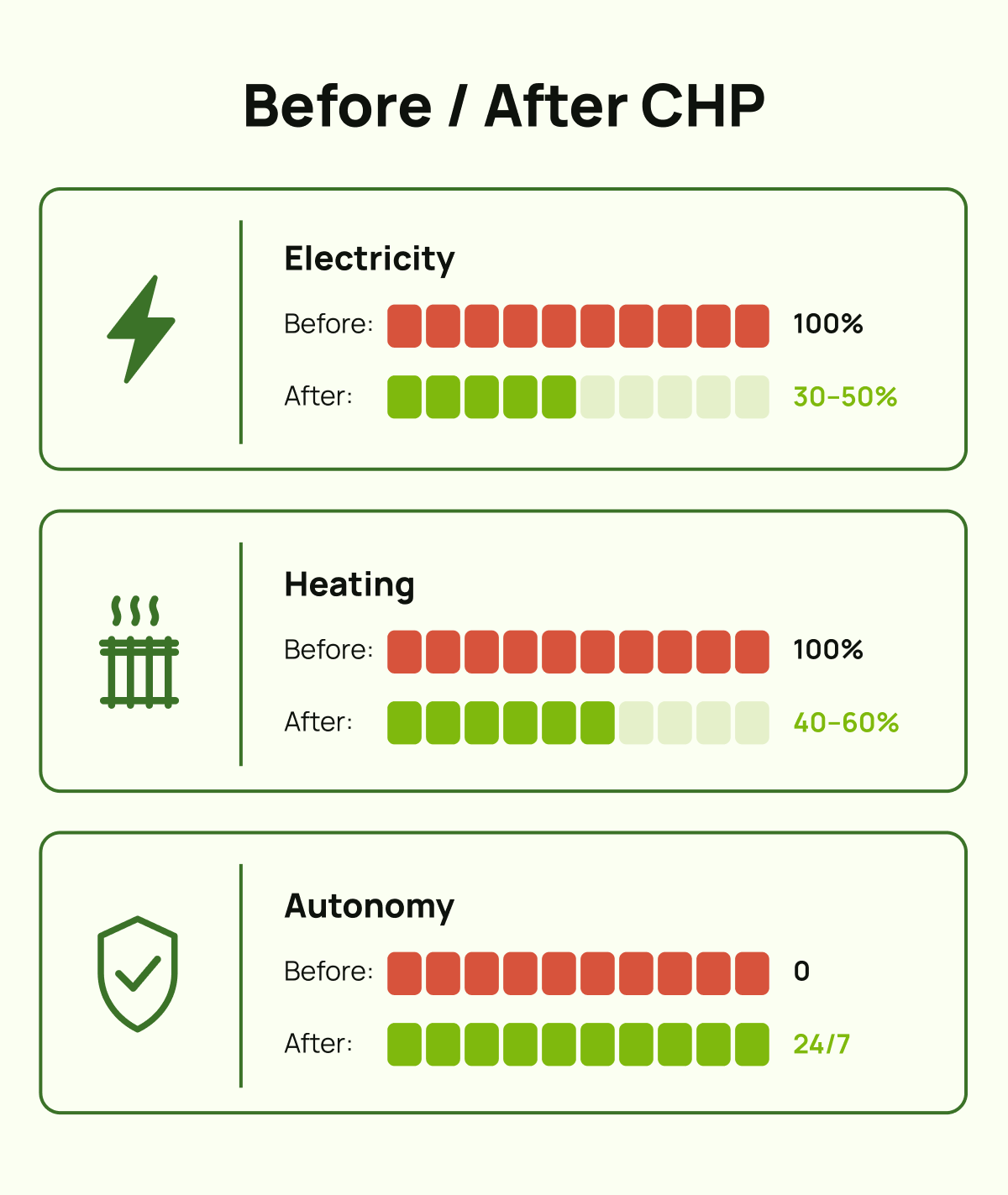
The economic efficiency of cogeneration is based on the principle of dual fuel utilisation — the simultaneous production of electricity and heat — which makes it possible to significantly reduce overall energy costs and improve the stability of the energy supply.
| Indicator | Before CHP | After CHP |
| Electricity | 100% | 30–50% |
| Heating | 100% | 40–60% |
| Autonomy | Year 0 | 24/7 |
| Vulnerability to power cuts | Full | Minimum |
Before / After CHP
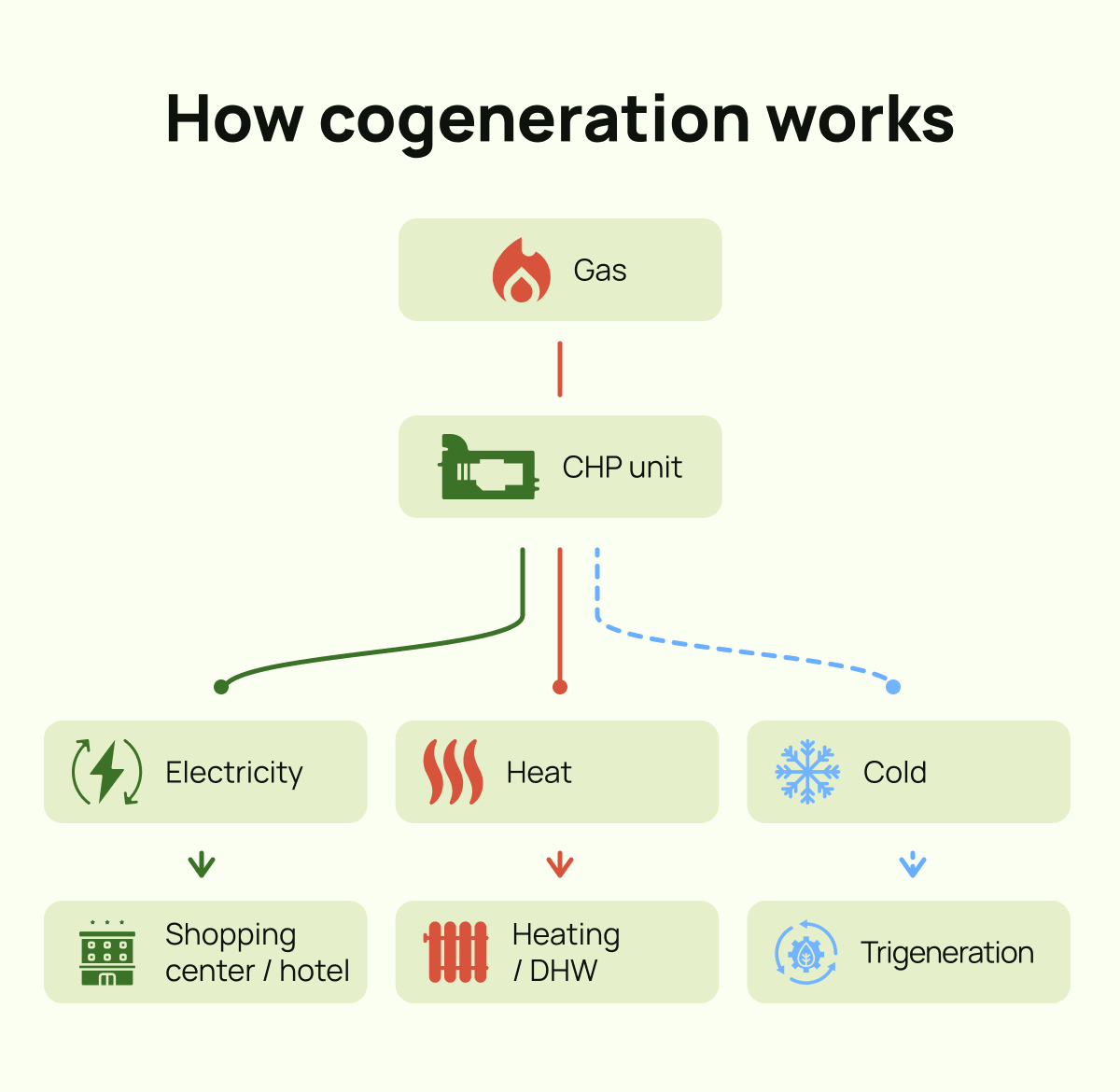
Trigeneration is a logical extension of cogeneration, whereby the production of cooling is added to the standard generation of electricity and heat. In practice, this means that the heat generated by the plant is not only used for heating or hot water supply, but is also converted into cooling using an absorption chiller.
For hotels and shopping centres, this is a crucial tool for improving energy efficiency, as a significant proportion of their annual energy consumption is accounted for by air conditioning and cooling during the summer months.
Implementing trigeneration for a hotel or shopping centre requires additional investment in an absorption chiller, which is integrated into the existing cogeneration system.
Island mode operation of a combined heat and power (CHP) plant enables a facility to be completely disconnected from the external electricity grid and to continue operating reliably during emergencies or power cuts. For commercial property, this is not merely a technical feature but a key factor in ensuring business continuity and safeguarding revenue.
Hotels:
A power cut has a direct impact on day-to-day operations: it can lead to services being suspended, problems with guest check-in, and disruptions to the kitchen and spa facilities. In extreme cases, this results in the forced evacuation of guests and significant damage to the hotel’s reputation.
Shopping centre:
For shopping centres, a power cut means an immediate halt to tenants’ operations, a loss of sales, disruption to logistics within the centre, and the risk of goods spoiling, particularly in shops with refrigeration equipment.
In stand-alone mode, the combined heat and power plant maintains the operation of the facility’s key systems:
This enables basic operational stability to be maintained even during a complete loss of external network connectivity.
The switch to autonomous operation takes place entirely automatically, without any staff intervention:
This mechanism provides businesses with genuine energy independence and minimises the risk of downtime.
Implementing a cogeneration project is a complex process that covers all stages, from analysing energy consumption to the full commissioning of the system. Each stage is critical to achieving the projected savings, ensuring the stable operation of the equipment and meeting the technical requirements of the facility.
In cogeneration projects, errors made during the planning and implementation stages have a direct impact on the system’s economics, efficiency and operational stability. Most often, these errors are linked to incorrect capacity selection, a failure to take thermal loads into account, or a lack of process automation.
Hotels and shopping centres are facilities where cogeneration demonstrates maximum efficiency thanks to their stable load, high energy consumption and critical need for an uninterrupted power supply. In such circumstances, investment in cogeneration units is not an expense but a means of achieving long-term energy and financial stability.
Pro-Energy’s real-life case studies show that:
To assess the potential of cogeneration specifically for your hotel or shopping centre, it is necessary to analyse the facility’s consumption profile and heat loads. Based on this data, it is possible to calculate the optimal capacity, projected savings and the project’s payback period.
Submit a request for a consultation with Pro-Energy’s experts and receive a bespoke energy efficiency assessment for your property.
Depends on size: 50–100 rooms — 100–200 kW; 100–200 rooms with a spa/swimming pool — 200–400 kW. An exact calculation will be provided following an energy audit.
Typical energy savings of 40–60 per cent. For a 25,000 m² shopping centre with a total installed capacity of 800 kW — €150,000–200,000 per year.
The typical payback period for a cogeneration system in a hotel is 3–4 years, assuming full heat recovery. Factors include: electricity tariffs, the operating hours of the cogeneration unit, and the presence of a swimming pool or spa.
Electricity, heating and cooling. The CHP unit generates heat, which an absorption chiller converts into cooling for air conditioning. Ideal for shopping centres and hotels with high cooling demand in summer.
Thus, when correctly configured, the CHP switches to stand-alone mode within 10–30 seconds. It ensures the continued operation of lighting, lifts, refrigeration equipment and security systems.
Send us a request, and we’ll personally provide the answers during a consultation.
Thank you for your request! The manager will contact you shortly to answer all your questions.
In the meantime, check out our implemented projects.
Periodically, you will receive letters from us with all the latest news from the field of bioenergy.
So that the letters do not end up in spam, please add info@pro-energy.com.ua to the list of contacts in the mail.
We will be in touch!