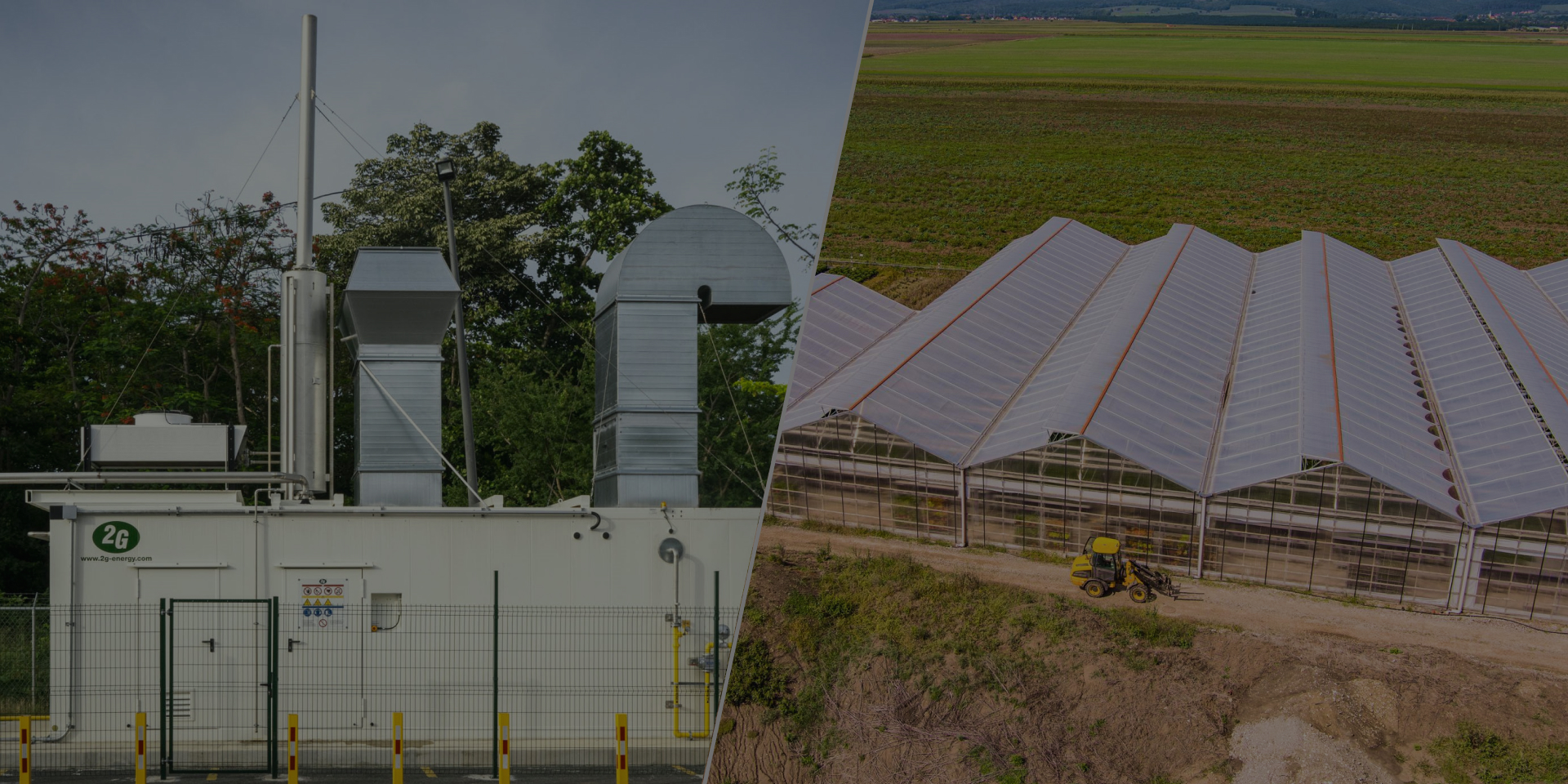
A power cut won’t halt production: how the CHP operates in island mode
Oleh Yovzhenko — 04.08.2026


Oleh Yovzhenko — 04.08.2026
The power cuts of 2022–2025 have shown that, without a backup power supply, business comes to a standstill along with the grid. A few minutes of downtime on the production floor can cost tens of thousands of hryvnias. The shutdown of refrigeration equipment, breaches in temperature control, and production line stoppages — all of these result in direct financial losses. That is precisely why an increasing number of Ukrainian businesses are moving away from backup power supplies towards on-site power generation.
Cogeneration during a blackout is a fully-fledged source of autonomous power supply. If the cogeneration unit is already running, island mode allows the facility to continue operating automatically after the external grid fails. If, however, the unit has been shut down, the Black Start function is required to restart it at a facility that has lost all power.
This article will be useful to manufacturing companies, the food industry, logistics operators and data centres — anyone for whom a power cut results in direct financial losses.
Island mode refers to the autonomous operation of a cogeneration plant without any connection to the external electricity grid. The CHP plant becomes the sole source of electricity for the facility, and the enterprise effectively operates as a separate local power system: it independently generates, consumes and balances the load, without the involvement of a grid operator or plant operator.
That is why a company’s backup power supply is now regarded as a strategic element in ensuring business continuity. A cogeneration plant supplies electricity to critical systems and core production facilities even during large-scale power cuts.
The system switches to stand-alone mode in several typical situations:
Island mode is activated provided that the combined heat and power plant is already in operation or ready for an automatic switchover. If the CHP plant was not in operation at the time of the blackout, the Black Start function is required to start it up.
In parallel mode, the CHP unit and the grid operate simultaneously: the unit covers the base load, whilst the grid supports peak demand. In island mode, the grid is physically disconnected, and the CHP unit alone handles the entire load. The switch between these modes occurs automatically, without manual intervention.
In effect, the off-grid CHP takes on the full role of a local power station: it maintains frequency and voltage and ensures a stable power supply to all priority consumers.
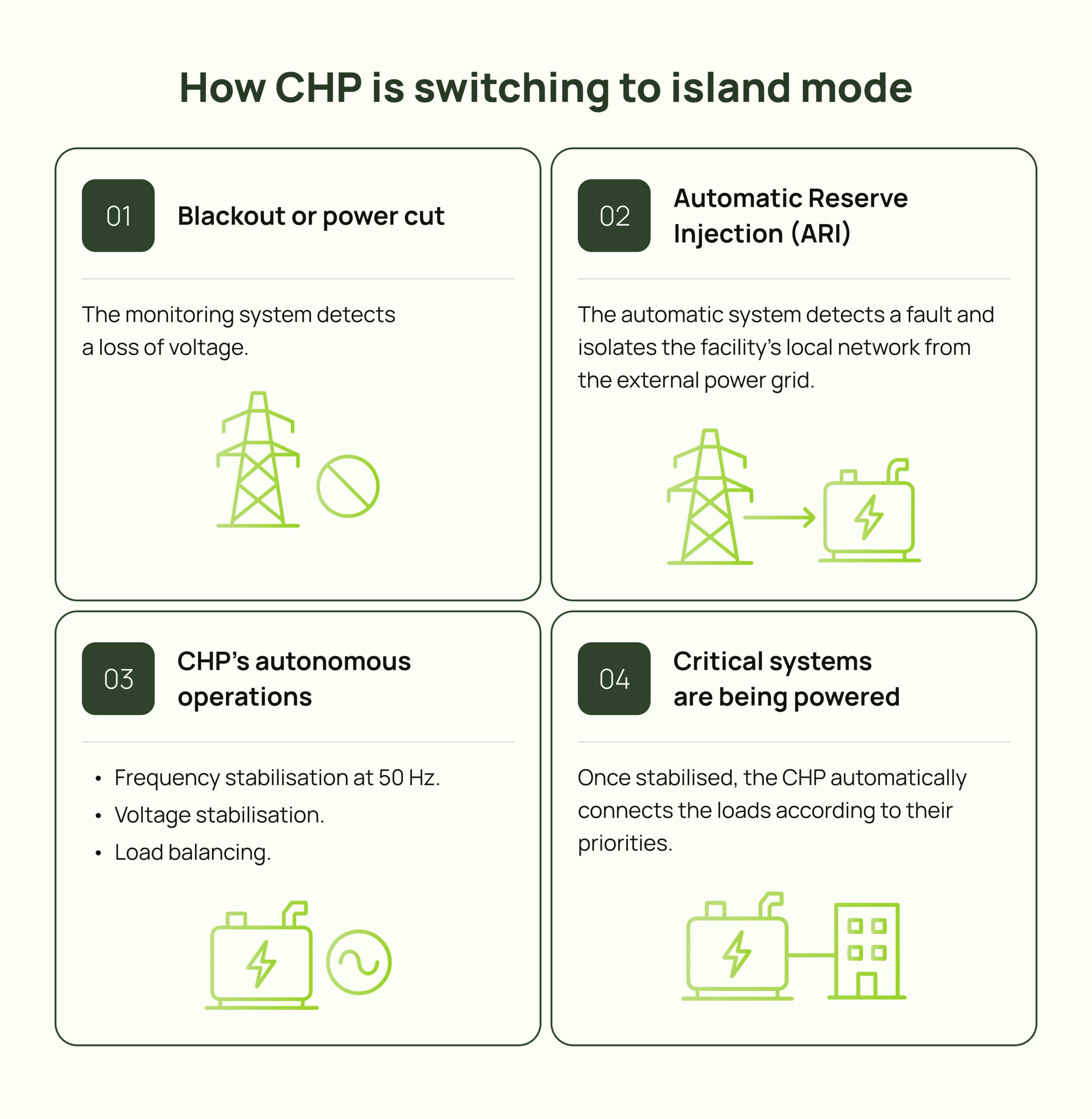
In the event of a power cut, the system responds according to a clear sequence of actions.
The total transition time is 10–30 seconds.
A brief power interruption of 10–30 seconds may occur. It is during this period that critical equipment — servers, automation systems and security systems — is supported by the UPS. Once the switchover is complete, the facility receives a stable power supply from the power generation unit without any further fluctuations.
Island mode and Black Start are different operating modes for a combined heat and power plant, although they are often confused.
Island mode is used when the UPS is already operating in parallel with the external mains supply. If the mains supply fails, the automatic system disconnects the facility from the mains, and the unit continues to power the facility autonomously. It is this scenario that ensures uninterrupted operation during a power cut.
Black Start is the ability to start a cogeneration unit at a facility that is completely without power, when neither the grid nor the cogeneration unit itself is operational. This requires a separate power supply system for the unit’s own needs (batteries or an auxiliary power source), which enables the engine and control systems to be started.
Not all cogeneration units come with a Black Start function as standard. If a business requires a fully autonomous start-up following a total power cut, this requirement should be taken into account as early as the design and equipment selection stage.
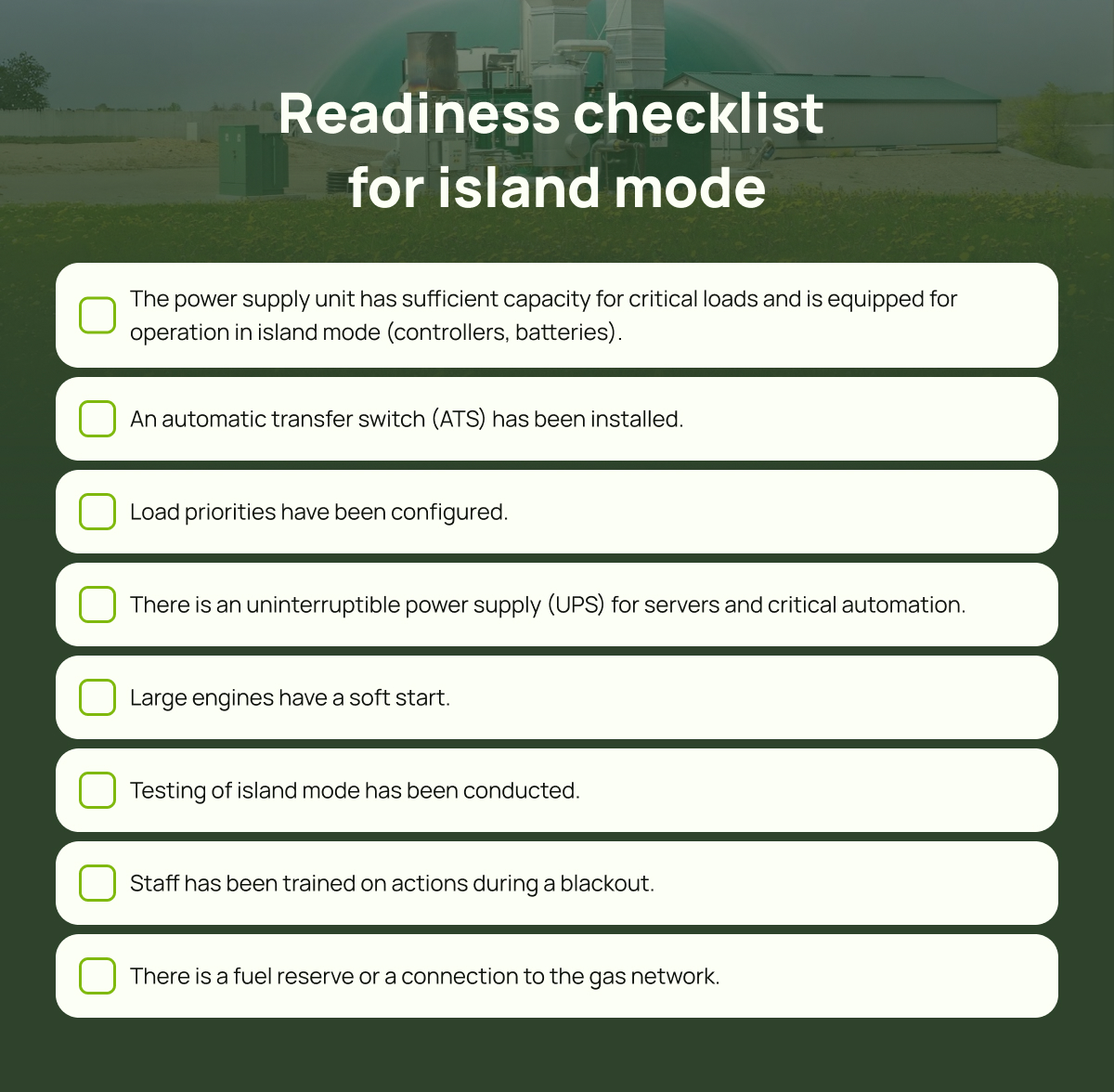
For the island mode to function correctly, the installation and associated equipment must meet a number of technical requirements.
Under normal conditions, the frequency of the grid is maintained by the power system. In island mode, this function is performed solely by the CHP: the motor speed controller maintains the standard 50 Hz on its own.
The AVR maintains a stable voltage and compensates for fluctuations in the event of a change in load, for example, when starting up high-power equipment.
The generator set is physically incapable of exceeding its rated power. If the load increases excessively, the priority system automatically shuts down non-critical loads, whilst the overload protection prevents the unit from being damaged.
During start-up, electric motors draw 5–7 times their rated current. For this reason, equipment is started up in stages, and soft-start systems are used for large motors — otherwise, the power distribution board may not be able to withstand the peak load.
Emergency lighting, security and fire-extinguishing systems, servers and communications, and ventilation where it is critical.
Production lines, refrigeration equipment, compressors, pumps.
Office equipment, non-essential lighting, air conditioning for comfort.
Electric heating — if the property is already supplied with heat from the central heating system, decorative lighting, and non-critical equipment. This is not a compromise on functionality, but a way of conserving the system’s capacity for the main heating supply.
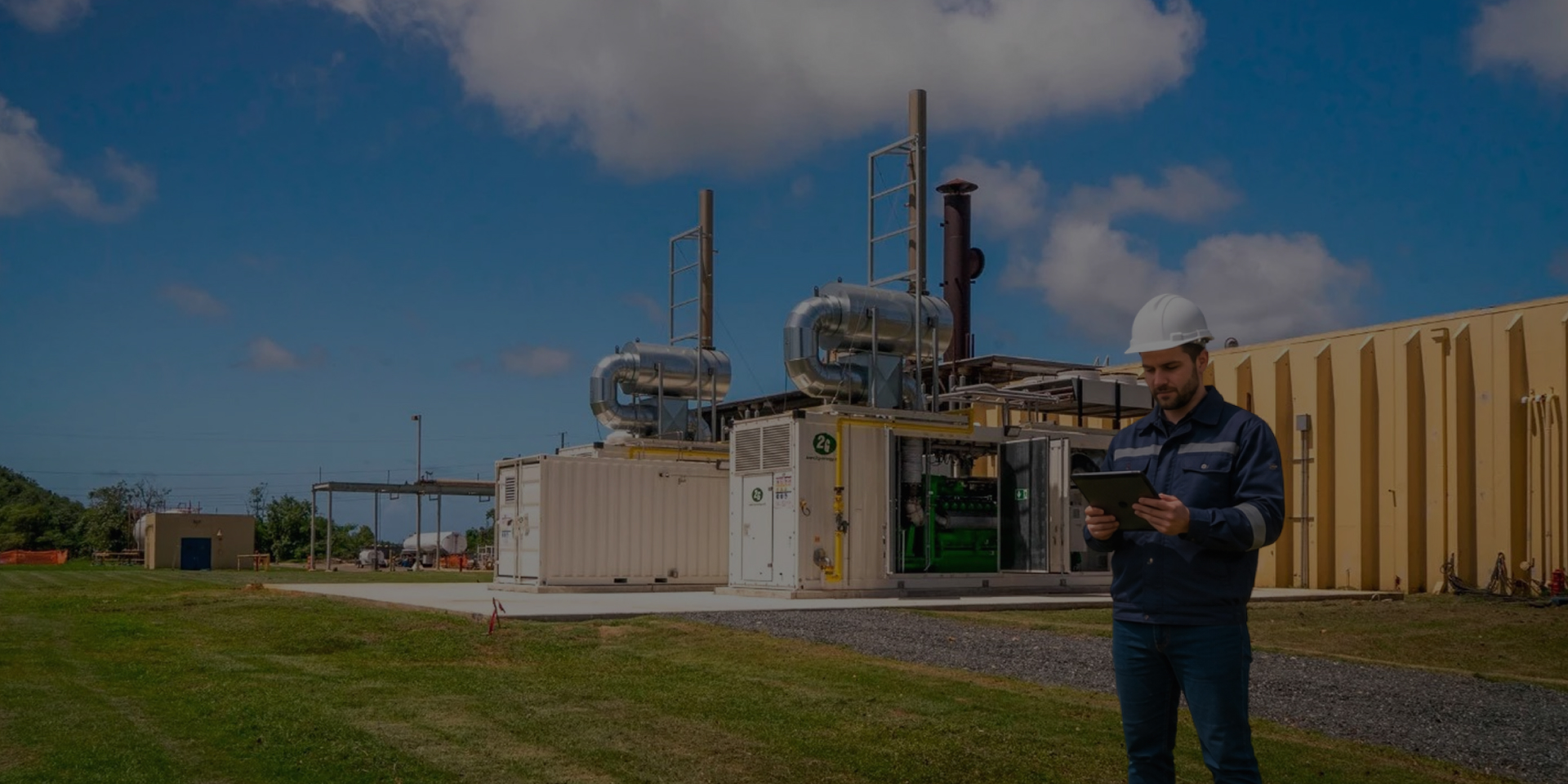
Logistics complex, Poltava Region. The team commissioned two 2G cogeneration units with a combined capacity of 675 kW of electrical power and 701 kW of thermal power. The equipment was commissioned in October 2025 following a 9-month implementation period, in partnership with 2G Energy AG (Germany). The Agenitor 406 (275 kW) and Agenitor 408 (400 kW) units operate in three modes: grid-connected, stand-alone “island” mode, and start-up during a total blackout. The complex’s overall efficiency is 85–87 per cent. The cascaded operation of the two units has made it possible to flexibly adapt generation to seasonal loads: in winter, the 400 kW unit carries the main load, whilst during periods of lower consumption, the 275 kW unit takes over. The project was installed without disrupting logistics operations; some of the work was carried out at night, with the facility temporarily switched to backup power. The result is 100% coverage of the facility’s electricity and heating needs, and a foundation for a future microgrid comprising a solar power plant and energy storage systems.
You can find out more about similar completed projects in the company’s portfolio.
Shopping centre, Lviv. The client had already purchased an AVUS 1000 Plus (2G) combined heat and power unit with an electrical output of 1,000 kW and a thermal output of up to 1,045 kW. They then requested a rapid commissioning of the equipment without interrupting the facility’s operations. Installation and commissioning were completed within one month, in accordance with the manufacturer’s specifications. The unit runs on natural gas, with an overall efficiency of 89.4 per cent. Part of the load is additionally covered by solar power generation — a hybrid model combining cogeneration and a solar power plant. The project demonstrates how quickly off-grid operation can be integrated into the existing infrastructure of a commercial facility without posing any risks to operational activities.
These projects confirm that energy self-sufficiency in production is now a prerequisite for the stable operation of a business in the context of an unstable power grid.
The duration of autonomous operation depends on the fuel reserve, the engine’s continuous running life, the engine oil reserve and the maintenance schedule.
The duration of autonomous operation between refuelling stops is determined by the service specifications for the specific model, operating conditions and fuel quality. Scheduled maintenance intervals must be specified in accordance with the manufacturer’s documentation for the selected unit. When connected to the gas network, operating time is virtually unlimited; when operating on biogas, it depends on the availability of feedstock.
The financial cost of this level of energy self-sufficiency can be estimated in the article on the cost of a combined heat and power plant in Ukraine.
Once the external mains supply is restored, the system detects this automatically, checks the quality of the mains supply, synchronises the generator set with the mains in terms of frequency, voltage and phase, and only then reconnects the unit to the mains.
Automatic restoration takes 1–5 minutes once the network is back online — without the need for staff intervention.
| Parameter | CHP | Diesel generator |
| Battery life | Unlimited (if it’s gas) | Limited by fuel supply |
| The cost of electricity | Low | High |
| Heat recovery | Yes | Usually not |
| Energy savings in normal mode | Yes (parallel operation) | No (reserve only) |
| Environmental friendliness | Higher | Lower |
| Noise | Lower | Higher |
The key difference is that a diesel generator operates solely as a backup and remains idle most of the time, whereas a diesel generator set saves on energy costs on a daily basis and, in the event of a power cut, simply switches to stand-alone mode without incurring any additional costs for maintaining a separate backup source.
A properly designed island mode system provides comprehensive protection against blackouts, covering not only the combined heat and power plant but also automation systems, load prioritisation, UPS systems and regular equipment testing. At the same time, the following mistakes are often made during the design and operation of a facility:
These and other practical challenges associated with implementation are discussed in more detail in the article on the challenges facing cogeneration in Ukraine.
This model is not only relevant to large factories — off-grid operation is increasingly being adopted by smaller facilities as well, as described in the article on cogeneration for small and medium-sized businesses.
The cogeneration unit’s island mode ensures the facility can continue to operate uninterrupted during power cuts. If the cogeneration unit is already running, the switch to island mode takes place automatically within 10–30 seconds. However, if a shut-down CHP unit needs to be restarted following a complete power cut at the site, the design must include a Black Start function. Unlike a diesel generator, a CHP unit not only serves as a backup power source but also enables energy savings during day-to-day operation. The key to reliable operation lies in correctly calculated capacity, a properly configured load prioritisation system and regular testing. For insights into the prospects for the development of such solutions in the coming years, read our article on cogeneration in Ukraine in 2026.
Would you like us to assess which off-grid configuration would be best suited to your specific site? The Pro-Energy team will carry out an energy audit and propose solutions tailored to your actual load profile — from power calculations to commissioning and staff training.
Island mode refers to the autonomous operation of a combined heat and power (CHP) plant without connection to the external electricity grid. The CHP plant becomes the main controlled source of the local power system or operates as part of a microgrid alongside other generation sources.
The automatic switchover takes 10–30 seconds, provided that the GSU was already operating in parallel with the external grid. If the unit was shut down, the Black Start function is required to restart it following a complete power cut.
When connected to the gas mains, the engine has an unlimited service life. When running on biogas, this depends on the supply of raw materials. A typical continuous operating cycle for the engine is up to 4,000 hours (half a year), after which scheduled maintenance is required.
The CHP unit is energy-efficient even in normal operation (running in parallel with the grid), has an unlimited operating time when connected to the gas supply, recovers heat, has lower electricity costs and is more environmentally friendly.
Technical requirements: automatic transfer switch (ATS), island mode controller, frequency and voltage regulator, load priority system. Recommended: UPS for critical systems, soft start for large motors.
Send us a request, and we’ll personally provide the answers during a consultation.
Thank you for your request! The manager will contact you shortly to answer all your questions.
In the meantime, check out our implemented projects.
Periodically, you will receive letters from us with all the latest news from the field of bioenergy.
So that the letters do not end up in spam, please add info@pro-energy.com.ua to the list of contacts in the mail.
We will be in touch!