How much does a combined heat and power plant cost for a business in Ukraine?

Volodymyr Kononchuk — 14.04.2026


Volodymyr Kononchuk — 14.04.2026
The cost of a cogeneration plant in Ukraine is one of the first questions asked by any manager or finance director considering in-house power generation. But a simple answer such as “from €X to €Y” is misleading. The actual cost of cogeneration includes installation, connection to the grid, documentation, maintenance, and fuel.
Pro-Energy delivers turnkey cogeneration projects — from feasibility studies through to commissioning and maintenance. The company’s portfolio includes dozens of completed cogeneration projects for the agricultural sector, industry, and municipal infrastructure, confirming the practical effectiveness of the solutions and the projected cost savings for the client.
In this article, we provide specific figures for each cost category, highlight the hidden costs that are not usually mentioned in commercial proposals, and outline a formula for calculating the payback period for your business.
The price of a CHP unit depends primarily on its capacity. Below are the approximate costs of equipment from European manufacturers as of 2026:
| Power of the CHP | Cost of equipment (€) | €/kW | Typical applications |
| 50 kW | 100,000–120,000 | 2000–2400 | A small restaurant and bakery |
| 100 kW | 190,000–210,000 | 1900–2100 | A hotel with 30–40 rooms, medical centre |
| 200 kW | 280,000–300,000 | 1400–1500 | Production, dairy factory |
| 300 kW | 340 000–370 000 | 1130–1230 | Greenhouse, pig farm |
| 500 kW | 500,000–520,000 | 1000–1040 | A large hotel, a poultry farm |
| 1,000 kW | 710,000–750,000 | 710–750 | Industrial sector |
| 2,000 kW | 1,200,000–1,300,000 | 600–650 | A large factory |
Note: Prices for equipment from European manufacturers as of 2026, excluding VAT
The pattern is clear: the higher the capacity, the lower the unit cost of cogeneration per kilowatt. This is the effect of economies of scale. The approximate costs of automation, ancillary equipment, and logistics decrease when calculated per unit of capacity.
Cogeneration is a technology that simultaneously produces electricity and heat from a single fuel source, with an efficiency of 85–92%. By comparison, conventional power generation utilises only 35–42% of the fuel’s energy. This explains the economic appeal of CHP, even when CAPEX is significant.
The price of a cogeneration plant can vary by 40–50% for the same power class, depending on seven key factors.
Premium segment — Jenbacher (INNIO), MWM (Caterpillar), Viessmann. These are combined heat and power units with an operating life of 60,000–80,000 hours before major overhaul. The premium over the base price is +15–30%, but this is offset by lower maintenance costs and high reliability.
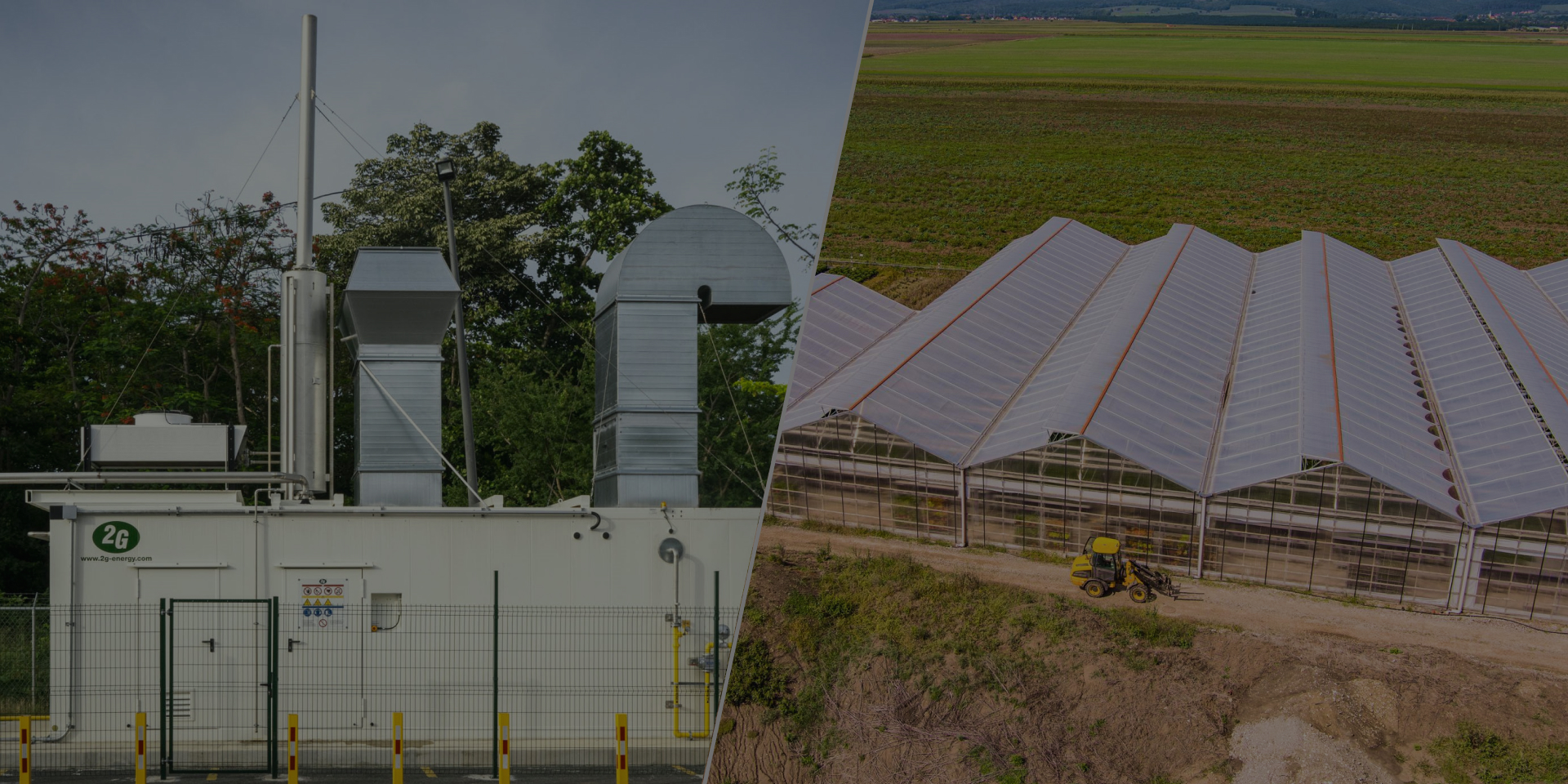
2G Energy deserves a special mention as one of the technological leaders in the European cogeneration market. This manufacturer’s equipment is noted for its reliable performance under variable loads, high efficiency, and good adaptability to Ukrainian operating conditions.
Pro-Energy is the official partner of 2G Energy in Ukraine, which is why we frequently use these solutions in our projects as they offer the ideal balance of reliability, efficiency, and cost.
Mid-range segment — TEDOM (Czech Republic), AB (Italy). These are well-balanced solutions in terms of price and quality, most commonly used in standard business cogeneration projects.
Budget segment — Chinese and Turkish manufacturers. This offers savings of 30–40% on the base price, but the motor’s service life is typically 30,000–40,000 hours, and maintenance and repair costs may be higher.
CHP running on natural gas:
This is the basic and most common type of cogeneration plant. The cost of such systems is taken as a benchmark for the market. For example, a 100 kW CHP unit costs €190,000–210,000, and a 200 kW unit costs €280,000–300,000. The design is as simple as possible — with no complex fuel-preparation systems — making it the cheapest option for maintenance.
CHP on biogas:
Compared to gas-fired plants, biogas solutions are more expensive due to their more complex engineering. As a rule, the price is 10–15% higher than the base price.
For example, a 100 kW biogas plant will cost €210,000–240,000. This is due to the need to install gas purification systems (to remove H₂S, moisture, and impurities) and the use of anti-corrosion materials. However, if you have your own feedstock, this allows for a significant reduction in fuel costs.
Read more about biogas production for cogeneration.
Dual-fuel CHP (gas + biogas):
This is a more flexible solution that allows the system to operate on two types of fuel simultaneously. Compared to standard gas-fired units, the cost increases by 15–20%. For example, a 100 kW gas-fired unit would cost €220,000–250,000.
The main advantage is the ability to switch between fuel types without interrupting operation, which is particularly important in the event of unstable biogas production.
The level of automation has a direct impact on the ease of use and operational reliability of the CHP.
Basic automation is already included in the standard price and allows you to monitor the system’s key operating parameters. Start-up and shutdown are performed manually, without the need for complex integration with other systems.
Full automation adds functionality for businesses: automatic restart in the event of a power cut, remote monitoring and integration with control systems. The cost of such a solution is €8,000–15,000.
A SCADA system is designed for industrial facilities. It provides full control over all parameters, predictive analytics and optimisation of operating modes. The additional cost is €15,000–30,000. This level of system is suitable for large-scale manufacturing facilities and data centres.
The configuration determines how ready the project will be for use and what costs will arise after purchase.
The basic configuration includes only the essentials: the engine, the alternator, the cooling system and the basic control systems. This is the cheapest option, but it requires additional investment during the start-up phase.
The standard package already includes a heat recovery system, a silencer, grid synchronisation, and a container or enclosure. This is the most common option for businesses.
A complete package (turnkey) is a “turnkey“ solution: it includes a fuel preparation system, heat storage, distribution manifolds, commissioning and staff training.
The difference between the basic and comprehensive options can be as much as 30–40% of the cost, but it helps to avoid hidden costs down the line.
The type of construction affects the speed of completion and additional construction costs.
The container CHP costs 15–25% more, but is supplied fully assembled. Installation itself takes 2–5 days, but the full project cycle takes several months.
The CHP in a “jacket“ adds 10–15% to the base price. It is installed indoors and is already soundproofed.
An open installation — this is the base price of the equipment, but it requires a separate room, ventilation and additional building work, which often cancels out the initial savings.
The efficiency of cogeneration depends directly on the extent to which the heat is utilised.
Basic heat recovery (50–60%) is included as standard and utilises heat from the engine cooling system.
High-efficiency recovery (80–90%) involves the installation of additional heat exchangers and a condensing economiser. This costs an extra €10,000–25,000, but enables maximum efficiency to be achieved and the project to pay for itself more quickly.
The origin of the equipment affects not only the price but also the commissioning timeframe.
Supplies from Europe:
The manufacture or assembly of power generation units in Ukraine (using imported engines and generators) enables savings of 15–30% compared to fully imported solutions, reduces logistics costs, and shortens delivery times. Typically, this involves the local integration and containerisation of units, rather than a full production cycle for the equipment.
A mistake that almost everyone makes is to focus solely on the cost of a combined heat and power plant without taking other cost items into account. The actual CAPEX is always higher.
Cost breakdown for a cogeneration project:
| Cost item | % of the cost of the equipment | Example (200 kW CHP plant, €280,000) |
| CHP (equipment) | 100% | €280 000 |
| Delivery and customs clearance | 3–5% | €7 500–12 500 |
| Design | 3–4% | €7 500–10 000 |
| Construction and installation works | 10–15% | €25 000–37 500 |
| Connection to the electricity grid | 0–10% | €0–25 000* |
| Connection to the gas network | 5–15% | €12 500–37 500 |
| Heating system | 8–12% | €20 000–30 000 |
| Commissioning | 2–4% | €5 000–10 000 |
| Unforeseen expenses | 5–10% | €12 500–25 000 |
| TOTAL (CAPEX) | 136–175% | €340 000–437 500 |
During the period of martial law, connection to the electricity grid is free of charge (Resolution of the National Energy and Utilities Regulatory Commission No. 875 of 8 May 2024)
Therefore, the total cost of cogeneration in Ukraine for a 200 kW CHP unit is €340,000–437,500. This represents an increase of 36–75% on the cost of the equipment.
In addition to the obvious items, there are other costs that are rarely included in initial estimates.
These include:
In total: €13,000–35,000. These costs often ‘pop up’ after the contract has been signed.
Transformer (if the existing one is not of sufficient capacity) — €15,000–50,000. UPS for the control system — €2,000–5,000. Condensate drainage system — €1,500–3,000. Gas, electricity, and heat meters — €3,000–8,000. Total — €21,500–66,000.
Under the standard procedure: technical specifications for electricity and gas supply are provided free of charge; project documentation costs €8,000–15,000; and project review costs €3,000–7,000. Total: €11,000–22,000. During the period of martial law, some procedures have been simplified and deadlines significantly reduced.
The advantages of cogeneration in wartime lie in the reduced regulatory burden that applies during martial law.
The costs associated with cogeneration do not end once the system has been installed. Annual operating costs for a 200 kW cogeneration unit:
| Cost item | €/year | Note |
| Natural gas | 45 000–65 000 | Based on 6,000 operating hours per year, the price of gas is €0.30–0.50/m³ |
| Motor oils | 2 500–4 000 | Replace every 1,000–1,500 hours |
| Maintenance | 5 000–8 000 | Routine maintenance, filter replacement |
| Repairs (reserve) | 3 000–5 000 | 1–2% of the cost of the equipment |
| Staff (if required) | 12 000–24 000 | Part-time operator |
| Insurance | 1 500–3 000 | 0.5–1% of the project cost |
| TOGETHER OPEX | 24 000–44 000 | Excluding the cost of fuel |
OPEX excluding fuel: €0.04–0.06/kWh

Financing for cogeneration is a key issue for most businesses. There are five options available.
Direct purchase — full payment from own funds, interest-free. Requires significant capital, but offers the shortest actual payback period.
Loans available at 5–7–9% — an opportunity to secure funding for energy-efficient and power-generating projects on significantly more favourable terms. This makes cogeneration accessible even to medium-sized businesses.
Leasing — 10–30% deposit, 15–22% annual interest rate, 3–5-year term. Ownership of the equipment is transferred upon completion of payments.
ESCO contract — zero upfront investment. The ESCO company installs the energy-saving equipment, and payment is made from the energy savings over a period of 5–10 years. Upon completion of the contract, the equipment is transferred to the client.
International grants — EU and EBRD programmes cover 20–50% of the costs. EU4Energy and the EBRD’s UKRSEFF provide technical and financial support. The conditions are a competitive selection process and compliance with efficiency requirements.
A quick return on investment is achievable when several factors come together:
The role of biogas plants in the post-war energy recovery extends beyond renewable generation alone: companies that combine their own biogas production with cogeneration are reducing the payback period for their projects to 2–4 years.
According to estimates by the State Agency for Energy Efficiency and relevant industry associations, as of 2026, there are approximately 550 cogeneration plants in operation in Ukraine, with a total capacity of around 1,400 MW. This represents an increase of more than 3.5 times compared to 2020.
How much does a CHP plant cost? There is no single answer to this question. The total cost of a cogeneration project is 40–80% higher than the price of the equipment alone: don’t forget about installation, connection, documentation, and site preparation.
The actual price of a cogeneration plant in Ukraine in 2026: from €55,000 (50 kW) to over €2,200,000 (2 MW). Cogeneration costs in operational mode — €0.04–0.06/kWh excluding fuel. Payback period for cogeneration provided the capacity and operating mode are correctly selected — 3–6 years. The fastest payback period is achieved when combining on-site biogas, a significant heat load, and long operating hours.
Would you like to calculate the cost of cogeneration for your business? The Pro-Energy team carries out a technical and economic feasibility study, taking into account your actual consumption profile, available fuel sources, and connection conditions. Contact us for a consultation — we will find the best solution with a predictable economic benefit.
The cost of a CHP unit depends on its capacity: 50 kW — €100,000–120,000, 100 kW — €190,000–210,000, 200 kW — €280,000–300,000, 500 kW — €500,000–520,000, 1 MW — €710,000–750,000. This is the price of the equipment. The total cost of cogeneration, including installation, connection and commissioning, is 40–80% higher.
The following costs must be added to the price of the equipment: site preparation — €13,000–35,000, additional equipment — €21,500–66,000, planning permission — €11,000–22,000, connection to the gas network — €12,500–37,500. During the period of martial law, connection to the electricity grid is free of charge.
OPEX for a 200 kW gas turbine, excluding fuel: €24,000–40,000 per year. This includes engine oil — €2,500–4,000, maintenance — €5,000–8,000, repairs — €3,000–5,000, staff as required — €12,000–24,000, and insurance — €1,500–3,000.
The typical payback period is 3–6 years. This depends on the electricity tariff, operating hours (ideally over 5,000 hours per year), the efficiency of heat recovery and the cost of fuel. If the plant uses its own biogas, the payback period is reduced to 2–4 years.
Five main options: outright purchase, a loan at 5–7–9%, leasing (10–30% deposit), an ESCO contract (zero initial investment), and international grants (covering 20–50% of the cost through EU and EBRD programmes).
Send us a request, and we’ll personally provide the answers during a consultation.
Thank you for your request! The manager will contact you shortly to answer all your questions.
In the meantime, check out our implemented projects.
Periodically, you will receive letters from us with all the latest news from the field of bioenergy.
So that the letters do not end up in spam, please add info@pro-energy.com.ua to the list of contacts in the mail.
We will be in touch!